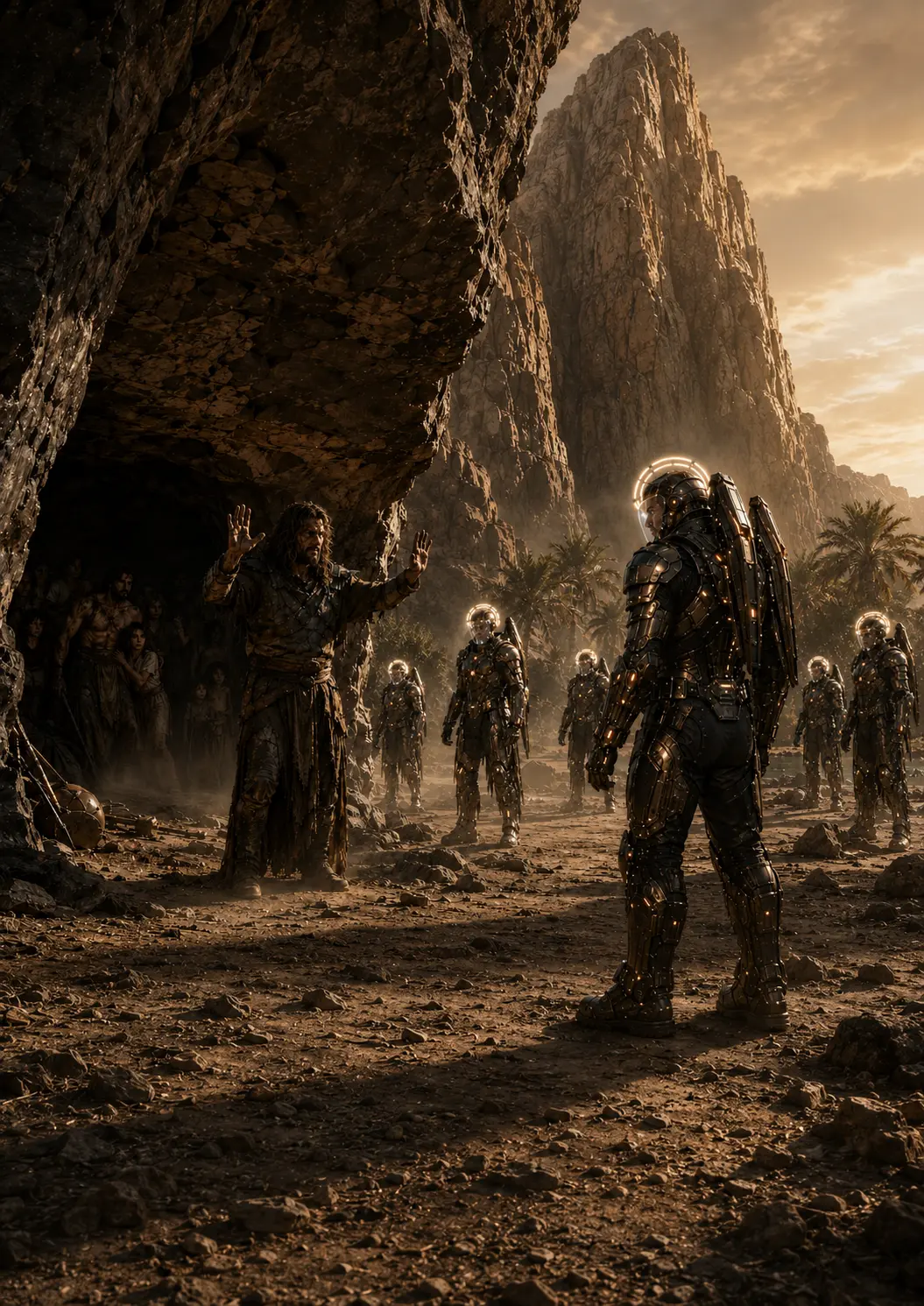
The biblical account of the sons of God and the Nephilim is famously brief. Other ancient writings expand that few-line mystery into a much larger story.
Genesis 6:1–4
Genesis describes the sons of God taking human women and places the Nephilim in the world around that time. It does not identify a leader, narrate an oath or explain the episode at length. Its brevity is one reason the passage has inspired so many interpretations.
1 Enoch and the descent of the Watchers
1 Enoch supplies the best-known expanded Watcher narrative. It names Samyaza as a leader, describes the oath of the two hundred, lists forbidden teachings and connects the giants’ violence with approaching judgement. This is the central ancient framework reimagined by the novel.
The Book of Giants
Fragments of the Book of Giants shift attention toward the giants themselves. Dreams, fear and the expectation of destruction give the children of the Watchers a voice within the catastrophe. Names preserved in these fragments helped shape parts of the novel’s cast and atmosphere.
Jubilees
Jubilees presents another version of the Watcher tradition and its relationship to corruption and the Flood. Read beside Genesis and 1 Enoch, it shows that the ancient story did not survive in only one fixed form.
From fragmented texts to one fictional history
The Book of Samyaza: The Watchers does not claim to decode these writings as theology or history. It uses their differences as creative space, asking how separate memories might arise from one chain of events. That approach places the novel within biblical science fiction: ancient source material rebuilt through a speculative technological world.