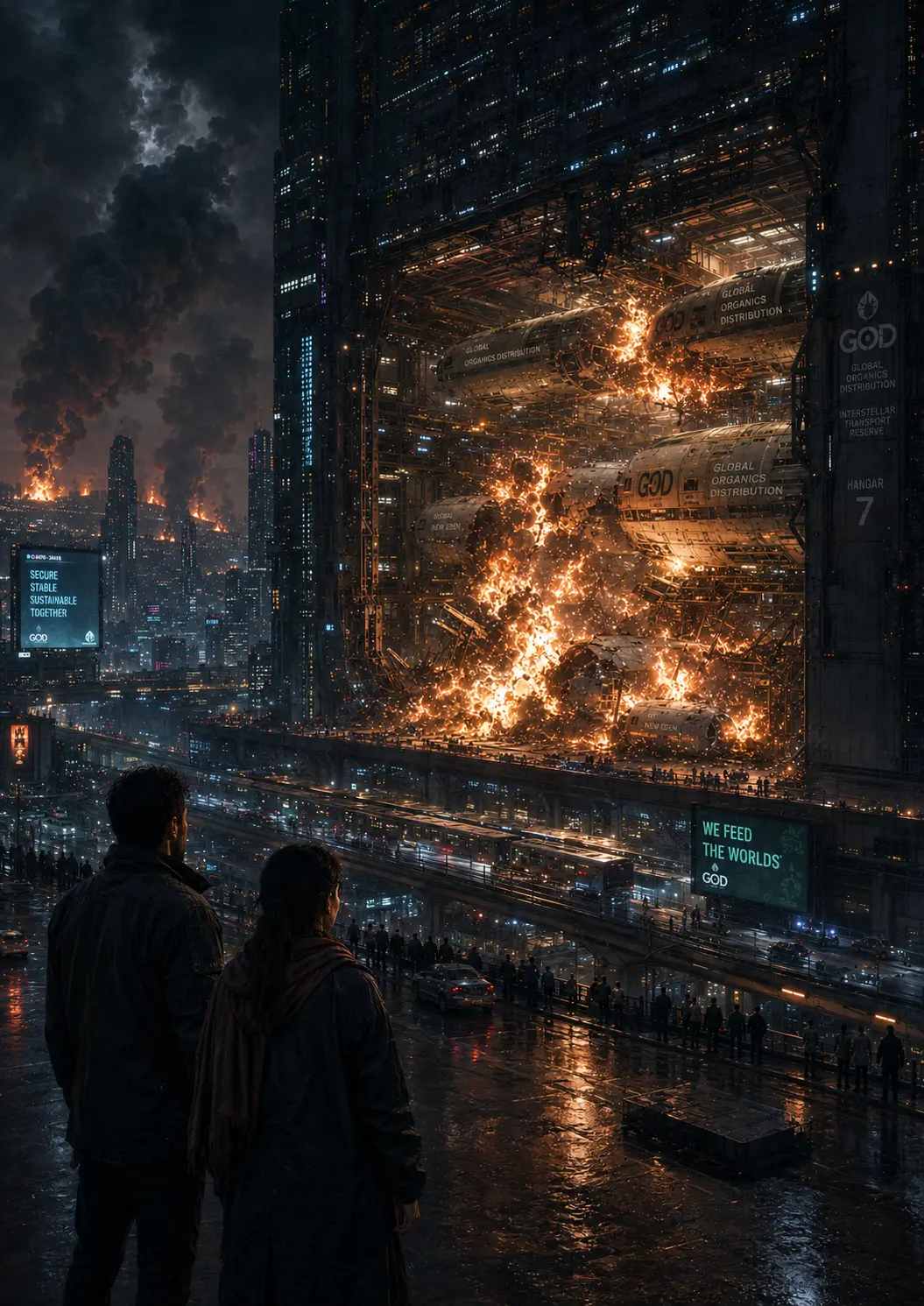
Biblical science fiction takes images or narratives associated with scripture and asks how they might appear inside a speculative universe.
Not simply a modernised retelling
The most interesting versions do more than exchange swords for spacecraft. They examine the distance between an event and the language later used to remember it. A technologically advanced visitor might be described as an angel. Protective equipment might become wings, halos or many eyes. A controlled intervention might become a miracle—or a judgement.
Why the Watchers fit science fiction
The Watcher traditions are especially suited to this approach. They concern observers who descend from above, cross a boundary, transfer knowledge and transform human history. Those ideas naturally connect with science-fiction questions about non-interference, unequal civilisations and the moral cost of technology.
The approach of The Book of Samyaza
The Book of Samyaza: The Watchers builds a physical world behind the remembered one. Haven H-38, its crew and the corporation they serve provide a framework for the descent. Yet the novel remains focused on the choices that make the old story endure: loyalty, loneliness, power, rebellion and the inability to reverse what has been taught.
The result is neither an argument against the ancient texts nor an attempt to prove them. It is a fictional answer to the question beneath the novel: what if the Bible were true—just not in the way you think?
Discover how Samyaza and the Watchers are reimagined, or compare the ancient texts behind the story.